

Who BoostUp is for
BoostUp is for a mid-market revenue team that has outgrown spreadsheet forecasting and wants a platform that adapts to how the business actually sells. If you run a mix of new business, renewals, expansions, and usage-based revenue, BoostUp's multi-dimensional forecasting handles those motions without forcing everything into a single pipeline view. RevOps leaders and CROs who need a defensible forecast number, plus deal and activity intelligence to back it up, are the core buyer.
It is a worse fit if you are a small team that just wants pipeline hygiene inside the CRM, or a global enterprise that has already standardized on a single incumbent. The largest organizations often default to Clari for brand and breadth, and Clari is the name most procurement teams already know. BoostUp competes by being more flexible and, by most accounts, easier to roll out, so it lands best with companies that value adaptability over the biggest logo.
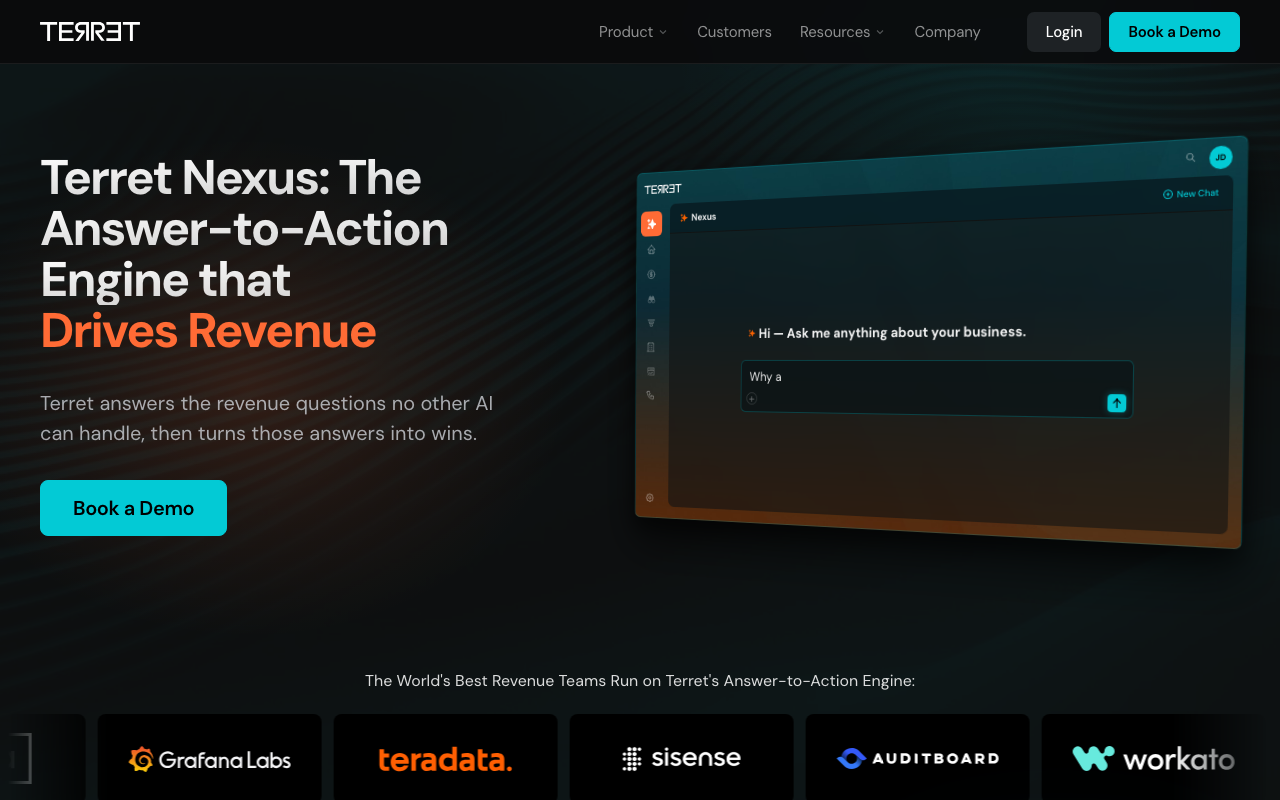
One note before you evaluate: BoostUp rebranded as Terret in September 2025 and now markets a fleet of AI revenue agents on top of the original platform. The forecasting and intelligence engine described here is the same product. Expect to see the Terret name on the website and in newer contracts, so confirm which branding and modules your quote covers.
Forecasting that bends to your revenue model
The core of BoostUp is its forecasting engine. Rather than a single roll-up, it supports multiple revenue models at once: subscription new business, renewals, expansion, and consumption or usage-based revenue. For SaaS companies whose revenue is no longer one clean number, that flexibility is the main reason to look here. You can build forecast categories and submission cadences that match how your managers actually run their calls, then compare the rep-submitted number against the machine forecast.
That machine forecast is the second pillar. BoostUp scores deals and pipeline using historical patterns and current activity, then flags risk: deals that have gone quiet, single-threaded relationships, or stages that have stalled past their normal cycle time. Reviewers consistently call out the deal and activity intelligence as the part that earns trust, because it gives managers something concrete to coach on instead of a gut feel.
Conversation intelligence and self-service RevBI
Two more modules round out the platform. Conversation intelligence records and analyzes calls, surfacing competitor mentions, pricing discussions, and engagement signals that feed back into deal scoring. It is not trying to beat a dedicated tool like Gong on standalone call analytics, but having it inside the same system that owns your forecast keeps the data connected.
RevBI is the piece RevOps people tend to like most. It lets your operations team define revenue metrics, build dashboards, and ship reports without waiting on a central data team or living in spreadsheets. If your forecast reviews currently start with someone exporting CRM data into Excel every Monday, that workflow is what RevBI is built to replace.
Where BoostUp lands on AI-stack fit
BoostUp earns a 70 AI-stack-fit score from CR Buddy. It is solid on the fundamentals and a step behind the frontier. It exposes a REST API and integrates deeply with Salesforce and other CRMs to pull the activity and revenue data its models run on, so your own code or an automation layer like Zapier or Make can read forecast and deal data out of it. That is enough to wire BoostUp into a reporting pipeline or push signals to Slack.
The gap is agent control. There is no first-party MCP server, so an assistant like Claude Code cannot drive BoostUp directly the way it can drive an MCP-native tool. The new Terret AI agents run inside BoostUp's own product and automate revenue tasks for users, but they are not the same as letting your external agent query and act on the platform through an open protocol. For now, any programmatic access goes through the REST API. That is workable for integration work and behind tools that ship MCP, which is why the score sits in the respectable-but-not-leading range.
Pricing notes
BoostUp uses custom pricing billed annually, quoted per seat and scaled by the modules you turn on: forecasting, RevBI, and conversation intelligence are commonly licensed separately. Some third-party listings cite a per-user starting figure, but the real number depends on seat count, modules, data volume, and enterprise terms like security and support, so treat any public figure as a rough floor rather than a quote.
There is no published self-serve plan and no free tier. The vendor offers a guided trial or proof of concept instead of a credit card signup. Because the line items stack, ask explicitly which modules are included before you compare quotes, and verify current numbers on the vendor's pricing page or directly with sales. The lack of transparent pricing is the most common complaint and the main reason smaller teams rule it out early.
The verdict
BoostUp is a capable revenue intelligence platform for mid-market teams that want forecasting flexible enough to match a modern, multi-motion revenue model, plus deal intelligence solid enough to coach on. The rebrand to Terret adds an agent layer worth evaluating if AI automation is on your roadmap, though it does not change the API-driven integration story or add MCP.
If brand recognition and enterprise breadth matter most, Clari is the safer default, and Aviso is worth a look if predictive forecasting with a built-in copilot is your priority. Compare all three in the best revops roundup before you commit to a quote.