

Who Close is for
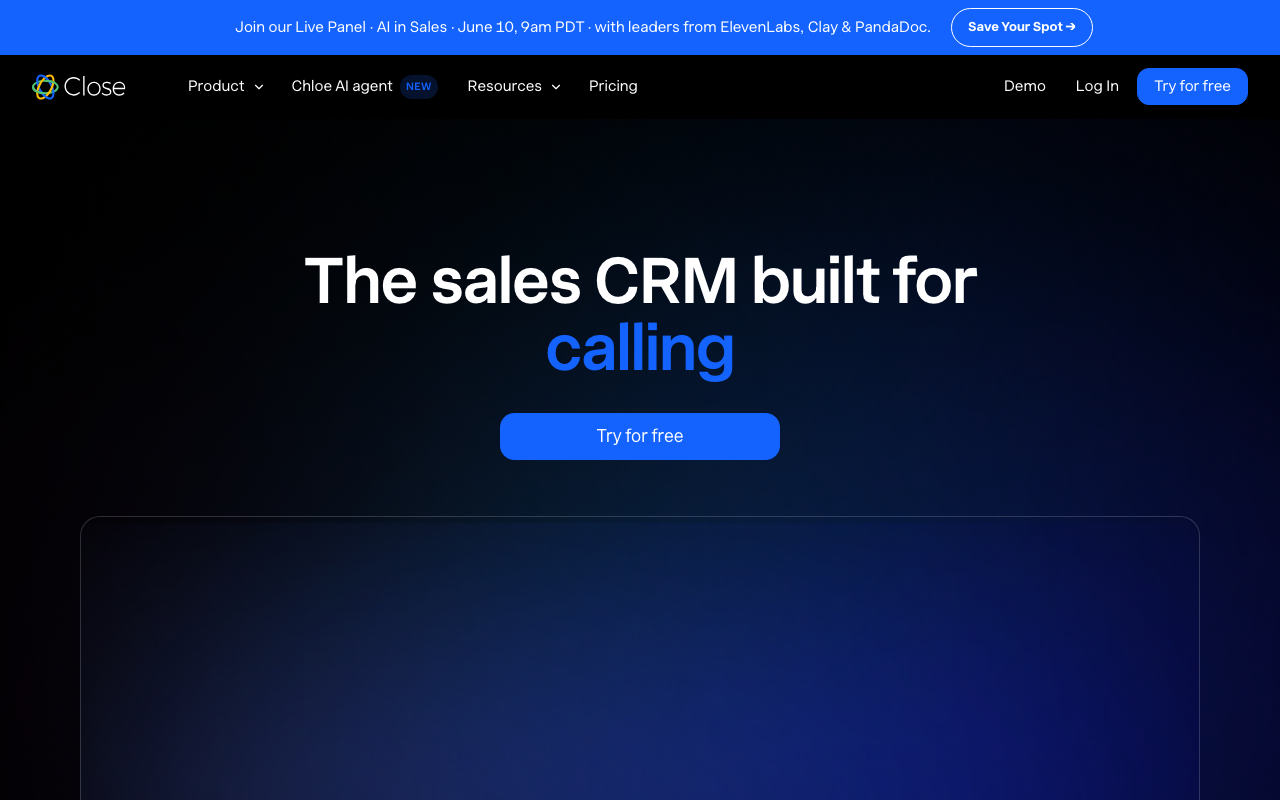
Close is for SMB and inside-sales teams that run high-volume outbound and live in the phone and the inbox all day. If your reps make 60 dials before lunch, send follow-up SMS, and need every call logged against the right lead without lifting a finger, Close removes more friction than almost anything else in the category. Founders running a scrappy sales motion, sales managers who want activity visible by default, and AEs who hate tab-switching are the core buyers.
It is a worse fit if you need deep customization or a CRM that models a complicated enterprise process. Close is opinionated on purpose, and that opinion is "make calls, send emails, move deals." If you want endless custom objects, granular permission schemes, and a platform that bends to a 12-stage approval workflow, a heavier tool like Salesforce Sales Cloud or even HubSpot Sales Hub will fit better. Close trades flexibility for speed.
A CRM with the dialer built in
The thing that sets Close apart is that calling, SMS, and email all live inside the CRM, with no Twilio account to wire up and no separate dialer tab. A rep opens a lead, clicks to call, and the recording, transcript, and disposition land on the timeline automatically. On the higher plans you get a Power Dialer that auto-advances through a list and a Predictive Dialer that calls several numbers at once and connects a rep when someone picks up. For a team whose whole job is talking to people, that consolidation is the entire pitch.
The rest of the product is built around keeping reps in motion. Smart Views let you save filtered lead lists, like "no contact in 14 days" or "trial expiring this week," and work them as a queue. Workflows automate the follow-up sequence so a rep does not have to remember when to send the third email. Reporting leans toward activity and pipeline health rather than boardroom dashboards, which matches the audience. Close also ships an AI layer now, including call summaries and an AI sales agent that can qualify leads and book meetings, with monthly AI credits bundled into each plan.
Where Close lands on AI-stack fit
Close earns its 88 AI-stack-fit score on both first-party agent tooling and a strong API. The REST API is complete and well documented: an agent or your own code can create and update leads, log calls, emails, and notes, query the opportunity pipeline, filter Smart Views, enroll leads in sequences, and run bulk operations. Webhooks let you push events out to the rest of your stack in real time.
Close also ships its own official, vendor-supported MCP server at mcp.close.com, so an assistant like Claude can drive Close natively. The server is HTTP Streamable with OAuth 2.0 and scoped read and write permissions, which means agent control does not depend on community connectors or custom glue. That combination, an official MCP endpoint plus a complete REST API and webhooks, is why Close scores near the top of the leaderboard. It also works cleanly with Claude and Claude Code, ChatGPT, and Zapier or Make for no-code glue.
Pricing notes
Close is per-seat and billed either monthly or annually, with the annual commitment discounting the headline rate meaningfully. There are four tiers. The entry plan is aimed at solo users and tiny teams and caps lead volume. The next tier opens up unlimited leads and team collaboration. The Growth tier adds automated workflows and the Power Dialer and is the one most mid-sized teams land on. The top tier unlocks the Predictive Dialer, call coaching, and lead visibility rules for high-volume operations. Each plan bundles a monthly AI credit allowance, and there is a 14-day free trial with no card required.
Two honest caveats. First, per-seat pricing adds up fast on a larger team, and the jump to the dialer-heavy tiers is steep, so do the math on full headcount before you commit. Second, calling and SMS usage is billed separately at cost on top of the seat price, so a high-dial team should budget for telephony as a line item. Close has renamed and repriced its plans more than once, so verify the current tiers, AI credit allowances, and usage rates on Close's pricing page before you buy.
The verdict
If your reps make calls all day, Close removes more friction than anything else, and the built-in dialer plus clean activity logging is worth the per-seat cost for a focused outbound team. Go in knowing it is a speed-over-flexibility tool: it will not model a complex enterprise process, and the bill climbs with headcount and call volume.
Weighing alternatives? Pipedrive is the better pick if you want a flexible, affordable pipeline CRM without the heavy calling focus, and HubSpot Sales Hub makes more sense if you need a broader platform that scales into marketing and service. See the full best crm roundup for the head-to-head.