

Who Hunter.io is for
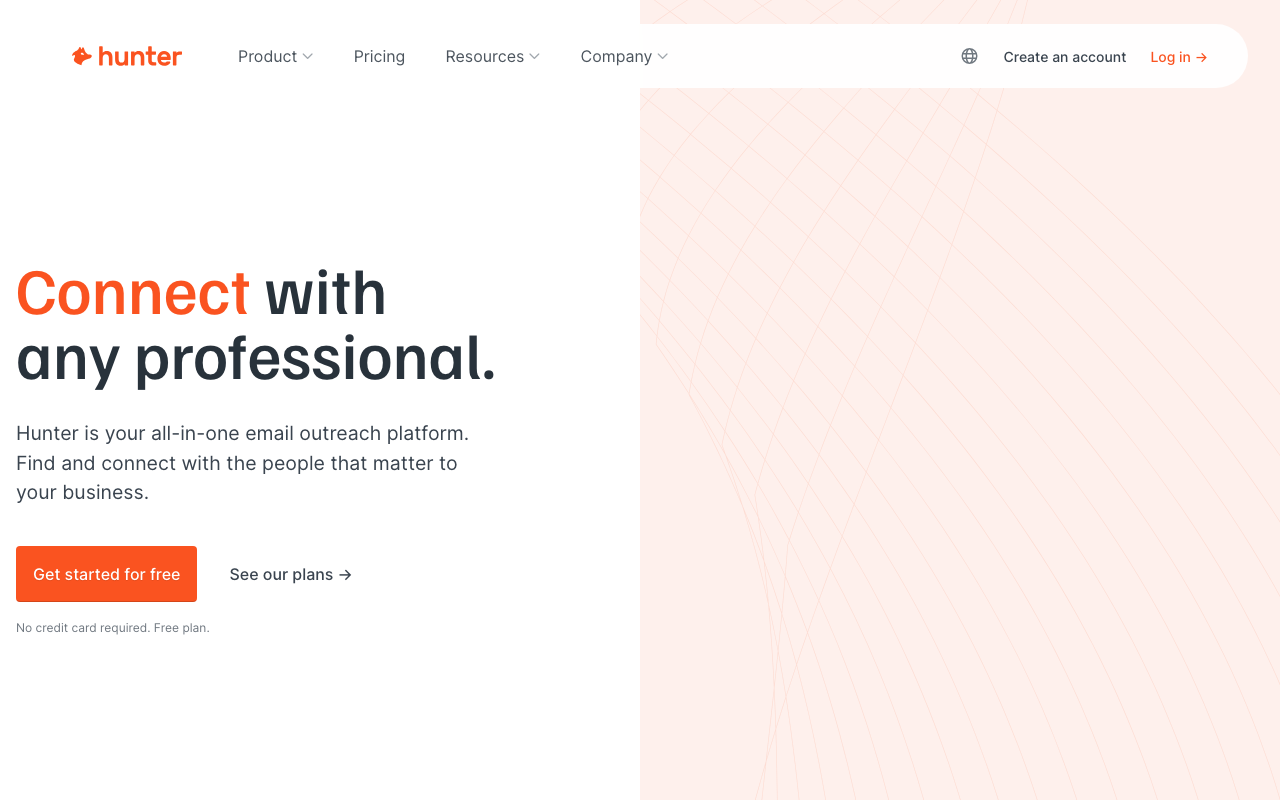
Hunter.io is for the team that wants the email finder everyone already knows, plus a straightforward reason to trust it: a genuine free plan, transparent credit-based pricing, and documentation that has aged well since 2015. If your prospecting is domain-first, meaning you already know which company you want to reach and need the right person's address, Hunter's Domain Search is the fastest path from company name to a list of real, formatted emails with confidence scores attached.
It is a weaker fit if your bottleneck is finding companies to target in the first place, or if you need heavy multichannel sequencing baked into the same tool. Hunter's Campaigns feature covers email sending, but it does not touch LinkedIn, calls, or SMS the way a dedicated sales engagement platform does. If your motion is broader than email, Snov.io bundles more channels for a similar entry price.
What Hunter.io actually does
Domain Search is the core: type a company domain and Hunter returns known email addresses tied to that domain, each with a confidence score and, where available, a name and title. Email Finder flips that around, taking a name and a domain and returning the most likely address. Email Verifier checks whether an address is live before you send to it, which matters for keeping bounce rates low. The AI Assistant layered on top helps draft and refine outreach copy from inside the same workspace, so you are not switching tools between finding a contact and writing to them.
Discover, Hunter's newer prospecting layer, lets you filter by industry, headcount, and seniority to build lists rather than looking up one company at a time. It is not a full data platform on the scale of ZoomInfo or Cognism, but it closes the gap between "I have one domain" and "I need fifty leads that match my ICP" without leaving the product.
Where Hunter.io lands on AI-stack fit
Hunter.io scores 80 on the Chief Revenue Buddy AI-stack-fit scale, the highest of the pure email finders covered here. The reason is straightforward: Hunter ships its own official MCP server, hunter-io/hunter-mcp, built and maintained by Hunter itself rather than a third party. Hunter has written publicly about the release on its own blog, which is a meaningfully different signal than the community-built wrappers most competitors in this category rely on. Point Claude Desktop or another MCP client at the server and an assistant can search domains, verify addresses, and manage leads without you gluing together API calls yourself.
Underneath the MCP layer sits Hunter's REST API v2, one of the more mature and widely documented APIs in the category, with SDKs and code samples across several languages. Between the official MCP server and the well-worn API, Hunter is a genuinely solid pick if you want an assistant to drive prospecting directly, not just automate around it with Zapier.
Pricing notes
Hunter's free plan gives 50 credits a month with no card required, enough to test real accuracy on your own target list before paying anything. Paid tiers start at the Starter plan, listed at €49 a month billed monthly or €34 a month billed annually (€408/year), covering 2,000 credits and three connected email accounts. Growth steps up to €149/€104 a month for 10,000 credits and ten accounts, and Scale reaches €299/€209 a month for 25,000 credits and twenty accounts. An Enterprise tier above that is custom-priced.
Every paid tier shares credits across the whole team at no extra cost, which is a meaningful difference from per-seat vendors where adding a teammate multiplies the bill. Confirm current credit allowances and account limits on Hunter's own pricing page, since vendors in this space adjust tier boundaries more often than the headline price changes.
The verdict
Hunter.io earns its reputation. The free plan is honest, the paid tiers are transparent, and the official MCP server puts it ahead of most of the category on agent-readiness. If your prospecting is domain-first and you want a tool an AI assistant can drive directly, Hunter is the safe default. For a bigger database with sequencing built in, compare it against LeadIQ; for the cheapest self-serve on-ramp, weigh it against Lusha. See the full best prospecting roundup and the AI-stack-fit leaderboard for the rest of the field.