

Who Woodpecker is for
Woodpecker is for teams and agencies that treat email deliverability as the whole game. If your problem is that messages land in spam, that sender reputation keeps slipping, or that a single burned domain takes down a campaign, Woodpecker was built around exactly those failure modes. It suits B2B teams running steady, ongoing outbound rather than one big blast, and it suits agencies managing many client accounts from one panel.
It is a weaker fit if you want the newest AI bells and whistles or a heavily visual sequence builder. Woodpecker is deliberate and a bit utilitarian. Reviewers on G2 praise its inbox placement and just as consistently flag that sequence management feels clunky, with no drag-and-drop for reordering steps. If you want a flashier all-in-one with built-in lead data and a slicker interface, Instantly or Smartlead will feel more modern out of the box. Woodpecker wins on reliability, not on novelty.
Deliverability is the actual product
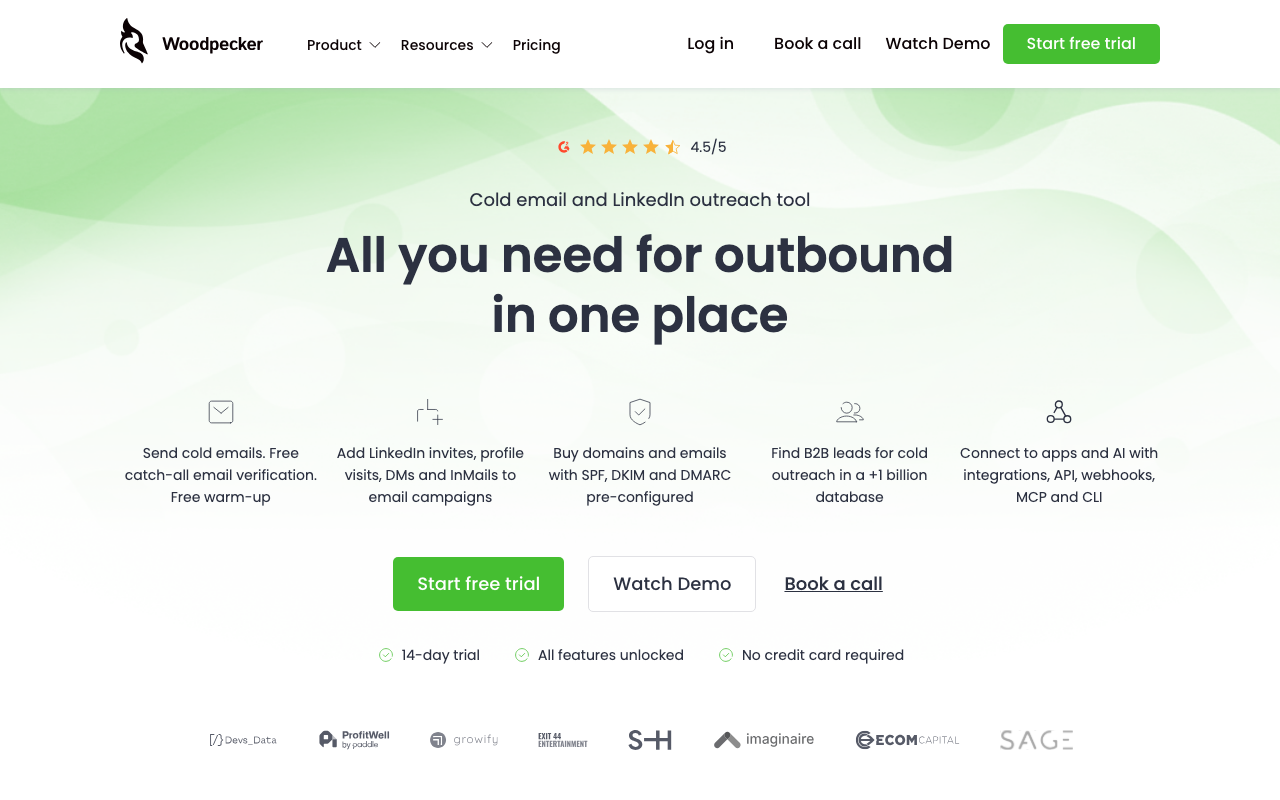
Most cold email tools claim to protect deliverability. Woodpecker structures the whole product around it. Adaptive sending throttles your volume automatically when bounce rates or spam signals spike, instead of plowing ahead and torching a domain. Inbox rotation spreads a single campaign across multiple connected email accounts so no one mailbox carries too much load, which is how serious senders keep volume up without tripping provider limits.
A free warm-up tool builds and maintains sender reputation before and during campaigns, and unlimited catch-all email verification trims bounces before they happen. The sending algorithm also avoids basic own-goals, like emailing someone who already replied, and mimics human timing with randomized intervals rather than firing on a rigid schedule. None of this is glamorous, and that is the point. For teams where inbox placement is a revenue line, Woodpecker takes the boring parts seriously.
Built for agencies and multi-account senders
The second thing Woodpecker does well is scale across many sending accounts and many clients. Unlimited email accounts and unlimited team members come with the platform rather than being gated behind a premium seat count, and an agency panel lets you manage separate client workspaces from one place. That combination is rarer than it sounds and is the main reason agencies stick with Woodpecker over cheaper consumer-grade tools.
Multichannel touches are available too. LinkedIn automation, profile visits, invites, and messages can be layered onto an email sequence as a paid add-on, which lets you add reply-rate touchpoints without bolting on a separate tool. A/B testing of subject lines and copy, condition-based campaign logic, and a built-in AI email writer round out the feature set. These are competent rather than category-leading, so think of them as useful extras on top of the deliverability core, not the reason to buy.
Where Woodpecker lands on AI-stack fit
Woodpecker earns an 85 AI-stack-fit score from Chief Revenue Buddy, which puts it near the top for cold outreach. The reason is straightforward: Woodpecker ships an official MCP server (Woodpeckerco/woodpecker-mcp-server, documented at developers.woodpecker.co) on top of a RESTful API at api.woodpecker.co/rest, webhooks, and native integrations with Clay, HubSpot, Pipedrive, and Zapier or Make. So an assistant like Claude or Codex can drive Woodpecker directly through the MCP server, not just through scripted API calls.
In practice that is a real advantage. You can push prospects in, pull campaign and reply data out, and wire events into the rest of your stack, either through the MCP server for agent-driven work or through the REST API and webhooks for fixed automation. The Clay integration is the most interesting piece for AI-driven outbound, since you can do the enrichment and research in Clay and hand a clean list to Woodpecker for sending. Just know that REST API and integration access sits behind a paid add-on rather than being included by default, so budget for it if programmatic control matters. Verify the current API and MCP terms on Woodpecker's pricing page before you plan around them.
Pricing notes
Woodpecker has moved to a usage-based model priced by contacted prospects rather than a fixed monthly tier. Entry pricing starts at $4 per 100 contacted prospects per month, and your bill scales with how many prospects you reach. There is a 14-day free trial with no card required, which is generous for the category, but no permanent free plan.
Two caveats matter. First, several capabilities are paid add-ons rather than base features: API and integration access ($20/mo), LinkedIn automation ($29/mo), and extra email accounts ($6/mo each) each carry their own fee, so the headline price understates what a full agency setup costs. Second, because pricing scales with contacted prospects, a large outreach volume can push your bill up faster than a flat per-seat tool would. Woodpecker has changed its pricing model more than once, so confirm the current calculator rate, prospect limits, and add-on costs on Woodpecker's pricing page before you commit.
The verdict
Woodpecker is a dependable, deliverability-first cold email tool, and that focus is exactly what makes it worth buying for the right team. Agencies juggling many client accounts and teams that have been burned by domain reputation problems will get real value here. If you want the latest AI features or a more polished sequence builder, look elsewhere first.
Weighing alternatives? Instantly leans into scale and bundled lead data, while Smartlead is the other deliverability-obsessed pick with strong inbox rotation. See the full best cold-outreach roundup for the head-to-head.