

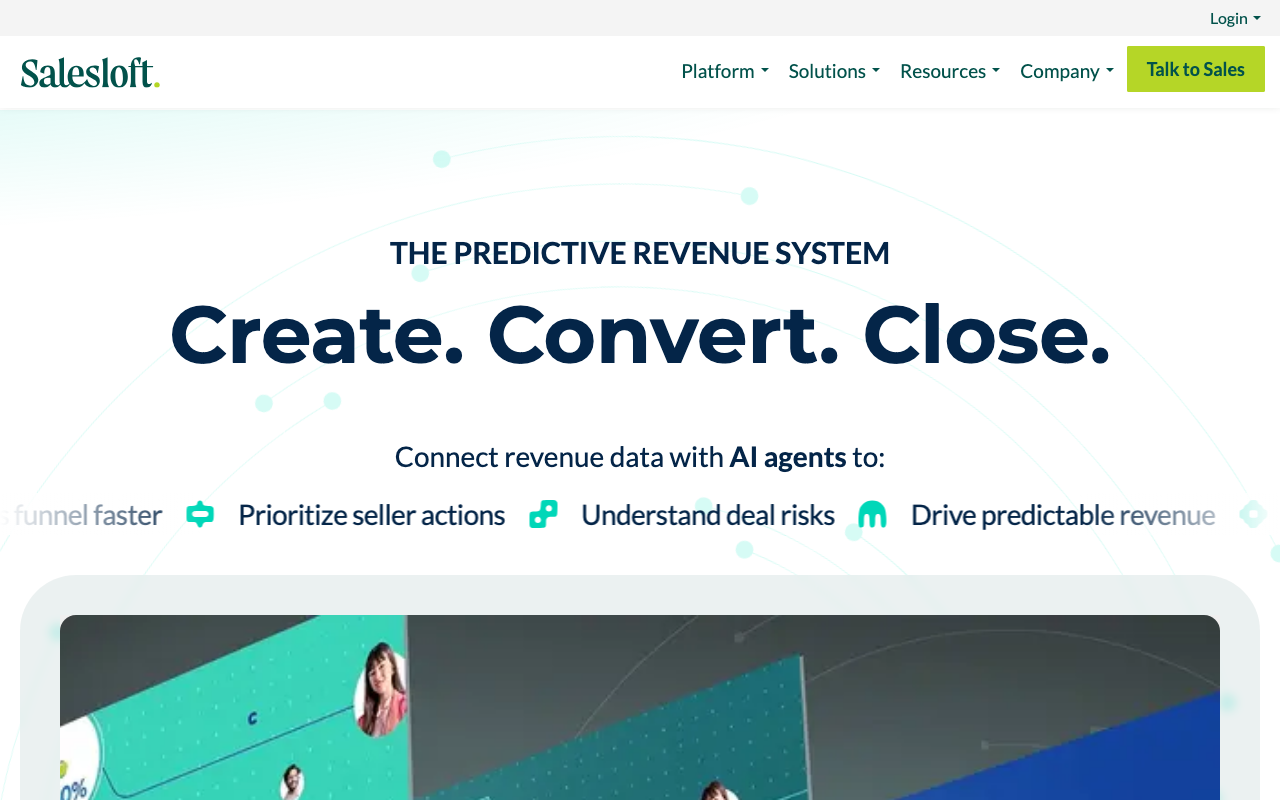
Who Salesloft is for
Salesloft is for revenue teams that want cadence, conversation intelligence, deal management, and forecasting under one roof, with an AI layer telling reps what to do next. If you run an SDR and AE motion at mid-market or enterprise scale and you are tired of stitching a sequencer to a separate call recorder to a separate pipeline tool, Salesloft is built to collapse that stack into a single platform. Sales leaders and RevOps people who care about visibility across the whole funnel get the most out of it.
It is a worse fit if you are a small team or solo seller who just needs sequences and email tracking. Salesloft sells custom annual contracts, so the entry price and the commitment are real, and the breadth of the platform takes time to adopt. A Gmail-based team that wants engagement without the enterprise weight will move faster with something like Mixmax. Salesloft pays off when the orchestration across signals, calls, and deals is the hard part you are trying to solve.
What Salesloft actually does
The core of Salesloft is Cadence, its sequencing engine for multi-step outbound and follow-up across email, calls, and social touches. That is the part most teams know it for, and it is mature. Around Cadence, Salesloft has built out a full revenue orchestration platform: Conversations for call recording, transcription, and coaching, Deals for opportunity and pipeline management, Forecast for predictive revenue, and an integrated Dialer so reps can call from inside the same workspace they sequence in.
The piece tying it together is Rhythm, the AI engine launched in 2023. Rhythm ingests first-party signals like email opens and website visits plus third-party intent data, then surfaces a prioritized list of next actions for each rep: who to call, who to email, and why this account is worth the touch right now. Instead of a rep guessing where to spend the morning, Rhythm hands them a ranked queue. That signal-to-action layer is the main thing separating Salesloft from a plain sequencer, and it is the reason the platform competes head to head with Outreach.
Why one platform instead of a stack
The argument for Salesloft is consolidation. When cadences, calls, deals, and forecasts live in the same system, the data is not siloed and the AI has more to work with. Conversation intelligence can feed deal risk scoring, engagement signals can feed Rhythm, and forecasting reads from the same pipeline reps actually work. It integrates with Salesforce and 180-plus business apps, so it sits at the center of a go-to-market stack. Following the Clari merger, Salesloft is leaning harder into the full revenue workflow, from first touch through renewal.
Where Salesloft lands on AI-stack fit
Salesloft scores 84 on Chief Revenue Buddy's AI-stack-fit scale. That reflects an official MCP server, built with Clari, for forecasting and execution, plus a documented REST API and webhooks and the Rhythm AI engine running inside the product. So if you want an external assistant like Claude or ChatGPT to read pipeline or trigger actions, you can connect natively through the MCP server or fall back to the developer API and webhooks.
That puts Salesloft near the top of the leaderboard for agent-readiness. Rhythm is genuinely AI-native inside the product, prioritizing actions on live signals, and the official MCP server now lets an outside assistant drive forecasting and execution workflows without custom glue code. The data depth is there, the orchestration is there, and the API is documented and capable. For teams pointing their own agents at the platform, that combination is hard to beat in this category.
Pricing notes
Salesloft does not publish prices. Everything is a custom, per-seat, annual quote, and the platform is sold in tiers that roughly map to Essentials (core Cadence), Advanced (adds Conversations and Rhythm), and Premier (adds Deals and Forecast). Reported list pricing tends to land in the low-to-mid hundreds per user per month, with Conversations and Rhythm often adding to the base, but those are third-party estimates and not vendor numbers. Treat any figure you see online as a starting point for negotiation, not a quote.
The honest caveats: there is no free plan and no self-serve sign-up, contracts are annual, and add-on modules can push the effective per-seat cost up meaningfully. Get a written quote that spells out which modules are included at which tier, and confirm the billing period and seat minimums. Verify current numbers and tier contents on Salesloft's pricing page and in your own quote before you commit.
The verdict
Salesloft is one of the two serious revenue orchestration platforms, and the choice between it and the field usually comes down to ecosystem fit and price rather than a missing feature. If you want cadence, conversations, deals, and forecasting unified with an AI layer that prioritizes rep actions, it earns its place on the shortlist. Go in expecting a real adoption curve and an annual commitment, and push hard on the quote.
Weighing options? Outreach is the closest rival and the natural head-to-head, and Groove is the better pick if your team lives inside Salesforce and wants native engagement. See the full best sales-engagement roundup for the comparison.