

Who Groove (Clari) is for
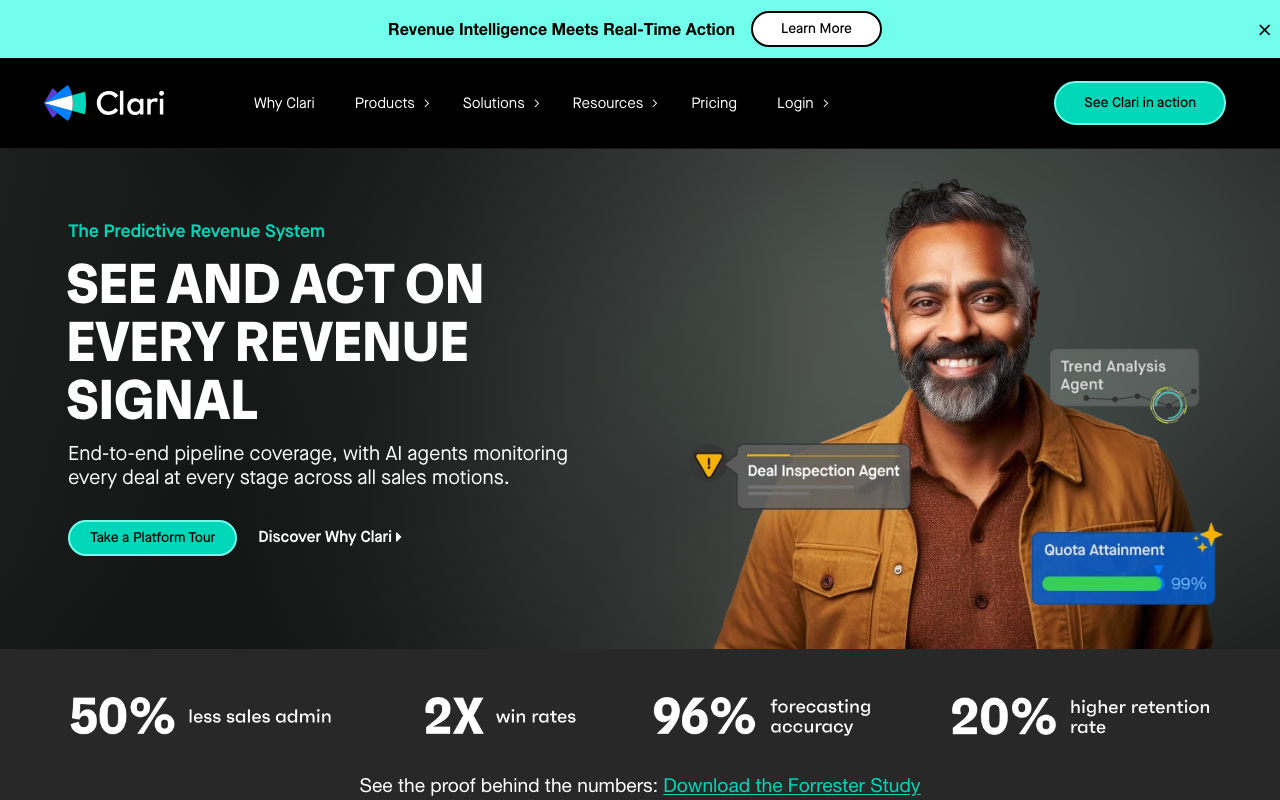
Groove is for revenue teams that live inside Salesforce and want their engagement layer to feel like part of it, not a bolt-on. If your reps already work in Salesforce all day, or in Gmail and Outlook with Salesforce as the system of record, Groove's whole pitch is that they never leave those tools while every email, call, and meeting logs itself. RevOps leaders who are tired of dirty CRM data and missing activity records get the most out of it. The platform now sits inside Clari's revenue platform, so larger orgs that already run Clari for forecasting can fold engagement into the same stack.
It is a poor fit if you are not on Salesforce. Groove is Salesforce-first by design, so HubSpot, Pipedrive, or Close shops should look elsewhere. If you run Google Workspace and want something inbox-native and cheaper, Mixmax is the more sensible pick. Groove also is not a prospecting tool: there is no contact database, no intent data, and no email finder, so you will need a separate source for leads.
Salesforce-native engagement that keeps CRM data clean
The core of Groove is activity capture plus flows. Activity capture automatically logs emails, calendar events, and calls back to the right Salesforce records without reps touching a field. For sales managers who have spent years chasing reps to update Salesforce, this is the feature that justifies the buy. The data integrity is the product. Because capture is reliable and two-way, the analytics built on top of it, both Groove's own and Clari's pipeline views, actually reflect what happened.
Flows are Groove's version of multi-step sequences: email, call tasks, and LinkedIn steps strung together and run at scale, with reps executing them from inside Salesforce or their inbox. There is a built-in dialer, scheduling links, email tracking, and templates, so an SDR can run an entire day of outreach without leaving familiar surfaces. Since the Clari acquisition, Groove has gained tighter access to Clari's analytics engine, which means activity data and pipeline signals feed the same dashboards. That is the real argument for Groove over a standalone engagement tool: the data round-trips cleanly to where leadership already looks.
The trade-off is scope. Groove does engagement and capture well, and it leans on Salesforce for almost everything else. That focus is a strength if Salesforce is your backbone and a limitation if you wanted one platform to also handle conversation intelligence or prospecting.
Where Groove (Clari) lands on AI-stack fit
Groove earns a low 44 AI-stack-fit score from CR Buddy, and the reasoning is straightforward. Groove has no documented public developer API of its own. It is Salesforce-native and reaches other systems through the Salesforce API plus Zapier and Make connectors, so any programmatic access to engagement data runs through Salesforce rather than a Groove endpoint. That deep Salesforce integration is both the point and the ceiling: a lot of Groove's logic assumes Salesforce is in the loop.
There is no MCP server for the Groove product. Clari and Salesloft announced an MCP server in April 2026, but it exposes Salesloft platform and Clari revenue-intelligence data, not the Groove sales-engagement product, so it does not give an agent direct control of Groove. That matters for CR Buddy's wedge. An assistant like Claude or a coding agent cannot drive Groove directly the way it can drive an MCP-native tool. To automate Groove from an agent today, you go through Salesforce or the Zapier layer, which works but means writing and maintaining the glue yourself. Groove and Clari have added AI assistants and AI email generation inside the product, so there is AI in the workflow for reps, but that is different from being controllable from the outside by your own agents. If agent-first control is a buying criterion, Groove is behind the curve, and the score reflects that.
Pricing notes
Groove uses custom, annual, per-seat pricing. There is no public price list and no free plan, so you go through sales to get a quote. Independent breakdowns put the engagement module somewhere in the rough range of $50 to $150 per user per month, and full Clari plus Groove bundles run materially higher once you add Clari Core and Copilot. Those are third-party estimates, not vendor numbers, so verify current pricing on the vendor's pricing page before you budget.
The honest caveats: expect a 12-month minimum commitment, with many enterprise deals running multi-year, and expect the cost to climb if you want the full Clari revenue platform rather than engagement alone. Because there is no self-serve tier, this is not a tool a single rep or a small startup buys on a card. It is an org-level commitment, which is consistent with its enterprise-and-mid-market footing.
The verdict
Groove is the engagement layer for teams married to Salesforce. If your CRM is Salesforce and clean activity data is a real pain, Groove solves that better than most, and the Clari connection makes it more attractive for orgs that already forecast in Clari. CR Buddy has not hands-on tested it, but the structured case is clear: deep, reliable Salesforce sync and reps working from where they already live, against custom pricing and a hard Salesforce dependency.
If you want broader name recognition and a larger ecosystem, compare it with Outreach and Salesloft, the two heavyweights in this category. See the full best sales-engagement roundup for the head-to-head before you sign an annual contract.