

Who Crustdata is for
Crustdata is for the person who builds prospecting systems in code, not the rep who wants a search box and a Chrome extension. If you are a GTM engineer or RevOps developer wiring up a signal-driven outbound motion, an AI SDR pipeline, or an internal enrichment service, Crustdata gives you real-time company and people data through a clean REST API that you can call from a script, an n8n flow, or an agent loop. That is its sweet spot, and it is a good one.
It is the wrong tool if you want turnkey. There is no self-serve UI for non-technical users and no list-and-sequence workflow built in, so a solo AE who just wants verified emails and a sending tool will be lost. That person should look at Apollo, which bundles data and sequencing in one platform. Crustdata assumes you bring the engineering and want the raw, fresh data underneath.
What Crustdata actually does
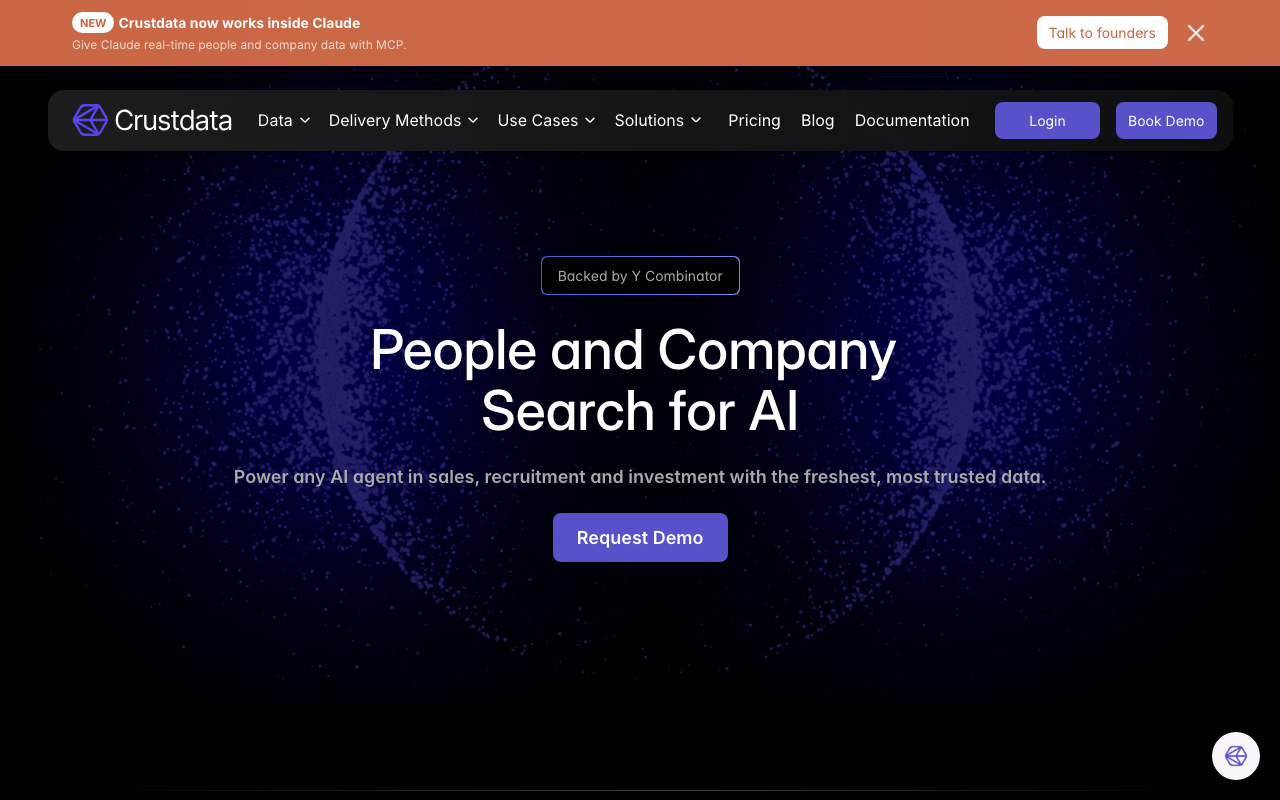
Crustdata delivers live B2B data through a set of focused API endpoints: company enrichment and discovery, people enrichment and discovery, a jobs listing API, a posts API, and a Watcher API for monitoring and alerts. The datasets behind these are large, covering tens of millions of companies and hundreds of millions of people, with profile, headcount, funding, web traffic, job postings, and social signal data refreshed on regular cycles.
The standout is freshness and signals. Crustdata tracks personnel changes, hiring surges and contractions, funding rounds, and other company events, then exposes them as data you can act on rather than a dashboard you watch. Its departmental headcount breakdowns and growth metrics let you build a trigger like "alert me when a target account opens three sales roles in a month," then pipe that straight into outreach. The Watcher API turns that into push-style monitoring on the people and companies you care about. Breadth across 16-plus datasets from one vendor is hard to match, and it is why data-hungry teams tolerate the build effort.
Standout strengths for builders
The query model is friendly to engineers. Crustdata supports SQL-style filtering on discovery endpoints and bulk CSV export for the cases where you want a dataset rather than live lookups. That flexibility matters when you are constructing your own ICP definitions in code instead of clicking filters in someone else's UI.
It also slots cleanly into the rest of a modern data stack. Plenty of teams use Crustdata as the fresh-signal layer feeding a tool like Clay, where Crustdata supplies the trigger data and Clay handles enrichment and research across the row. If you already orchestrate prospecting in code or an automation platform, Crustdata drops in rather than trying to own your workflow.
Where Crustdata lands on AI-stack fit
Crustdata scores 86 on CR Buddy's AI-stack-fit scale, which puts it near the top of the prospecting category, and it earns that for one reason: it was built API-first for developers and AI agents, not retrofitted with AI features. The REST API is well documented, the endpoints map to clear jobs, and the responses are clean enough to feed straight into a model's context. An agent that needs fresh firmographic or signal data can call Crustdata as a tool and get structured results back, which is exactly the pattern AI prospecting agents need.
MCP is now covered too. Crustdata runs an official hosted Model Context Protocol server at mcp.crustdata.com, authenticated with OAuth 2.1 and Dynamic Client Registration, exposing 23 tools across companies, people, jobs, posts, and watchers. The docs walk through connecting it to Claude and Claude Code, so you can plug Crustdata into an agent loop without building a wrapper yourself. That vendor-maintained MCP layer plus the clean REST API is why it scores high in the prospecting category. For builders who prefer to call endpoints directly, the API path is still there.
Pricing notes
Crustdata runs on a credit model rather than fixed seats. You buy credits, and each endpoint consumes a different amount: search and discovery calls are cheap per result, while enrichment costs more, with person enrichment scaling up as you request phone numbers or other premium fields. Some calls, like autocomplete and domain identification, are free. Credits carry a validity window after purchase, and the heavier live endpoints are plan-gated with custom pricing on top of the self-serve tiers. A 14-day trial lets you test before committing.
The honest caveat is twofold. First, usage-based costs need active monitoring, because a poorly scoped job that enriches every record will burn credits fast, the same trap Clay users hit. Second, public pricing is thin and the headline numbers move, so do not anchor on any figure you read in a roundup. Verify the current credit rates, tier gating, and trial terms on Crustdata's pricing page before you budget.
The verdict
If you are coding your outbound, Crustdata is one of the best data APIs going. The freshness, the signal endpoints, and the clean developer experience make it a strong foundation for AI-driven prospecting, and the 86 AI-stack-fit score reflects that. Go in knowing it is a developer tool with usage-based billing, so plan for someone who can build against an API and keep an eye on credit spend.
Weighing options? Clay is the better pick if you want a visual workflow that orchestrates many providers, and Apollo wins for reps who need data and sequencing in one turnkey app. See the full best prospecting roundup for the head-to-head.